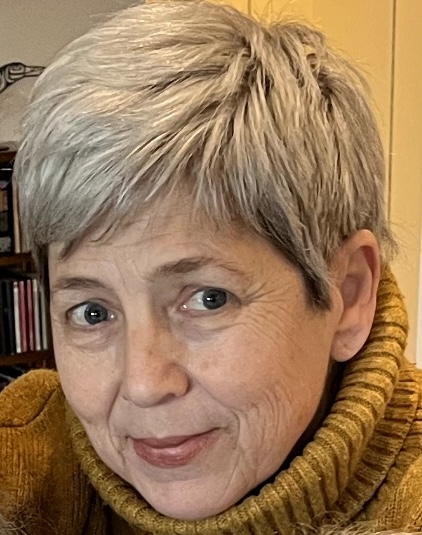
Rebekah
Edwards
Founder · Accessibility, Inclusive Pedagogy & Writing
If you have been told — by a grade, a diagnosis, a system — that your work isn’t good enough, I want to suggest that it is the system you were taught inside that was the problem. What you’ve been told is the obstacle is almost always the source of creative and intellectual strength and possibility. My work is building the conditions where that becomes not just possible to see — but possible to use.
Rebekah Edwards is a writer and educator whose practice spans more than two decades of work with undergraduate and graduate scholars and creative professionals in academic and creative fields. As Associate Professor of Critical Pedagogies in CCA’s undergraduate and graduate programs, she works at the intersection of rigorous scholarship, creative-critical thinking, and inclusive teaching strategies — across online, hybrid, and in-person environments — including course design, curriculum development, and program-level work at the intersection of high school and college.
She runs workshops for institutions on inclusive pedagogy in its fullest sense. She mentors faculty in short and long-term relationships, coaches graduate students across the full arc of academic projects from a single chapter to a completed dissertation, and has recently extended her practice to homeschool instruction for younger writers finding their voice.
Her curriculum work includes the design of a Summer Bridge Program supporting students in the transition from high school to college — building the pedagogical strategies, course sequence, and scaffolding from the ground up. Her accessibility work has been recognized with the NEH Accessible Futures Fellowship (UCLA, 2015), the Ruth Masako Award for outstanding accommodation of students with disability needs, and the Elisabeth Siekhaus Faculty Achievement Award for excellence in teaching and responsiveness to a diverse student body — the latter are both faculty- and student-voted awards and being honored by those communities is something she cherishes.
Rebekah holds a Ph.D. in English with a Designated Emphasis in Gender, Women, and Sexuality from UC Berkeley and an M.A. in English and Creative Writing from UC Berkeley. Her scholarly writing has appeared in Australian Feminist Studies, Image and Narrative, Rhetoric, Politics and Culture, and TSQ: Transgender Studies Quarterly, among other peer-reviewed journals. Her poetry book Then’s Elsewhere (Redwood Coast Press, 2010) received the Redwood Coast Book Award. She writes across fiction, poetry, and creative nonfiction, and brings a practitioner’s fluency to every coaching relationship.
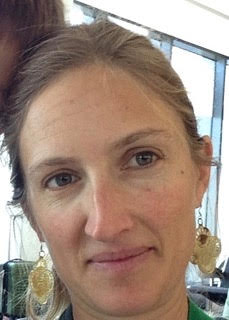
Saraleah
Fordyce
Founder · Values-Centered Coaching, School Leadership & Nonprofit Writing
I believe in the productive struggle of articulation, that language can be a transformative tool, and that finding doorways to clarity is a skill we can build.
Saraleah Fordyce is an educator, writer, and woodworker who brings an artist’s understanding of process to every teaching and mentorship relationship. She has taught design studies and critical theory to undergraduates and graduates at California College of the Arts since 2011, and before that at Parsons the New School for Design, where she earned her MFA in 2006. She has spent her career working at the intersection of visual practice, writing, mentorship, and pedagogy.
She works with graduate students in interdisciplinary design programs, serves as a leadership and pedagogical coach for school leaders and educators navigating complex institutional environments, and supports nonprofits and community organizations in developing their written voice and communications capacity. As a consultant and Advisor, she is a deep listener and works to guide clients and students to align time and actions with values, to invest in a sustainable lifelong practice. Her clients have included California College of the Arts, the University of San Francisco, The Nueva School, and I am CARIBBEING of Little Caribbean Brooklyn, among others. She is a regular contributor to Design and Culture, where her reviews engage questions in architecture, futuring, pedagogy, and design practice more broadly.
Her studio practice, which has spanned painting, sculpture, and custom furniture making, fuels her curiosity and capacity to work with materials beyond logic and practicality, and to support others as they take creative steps in their own fields.